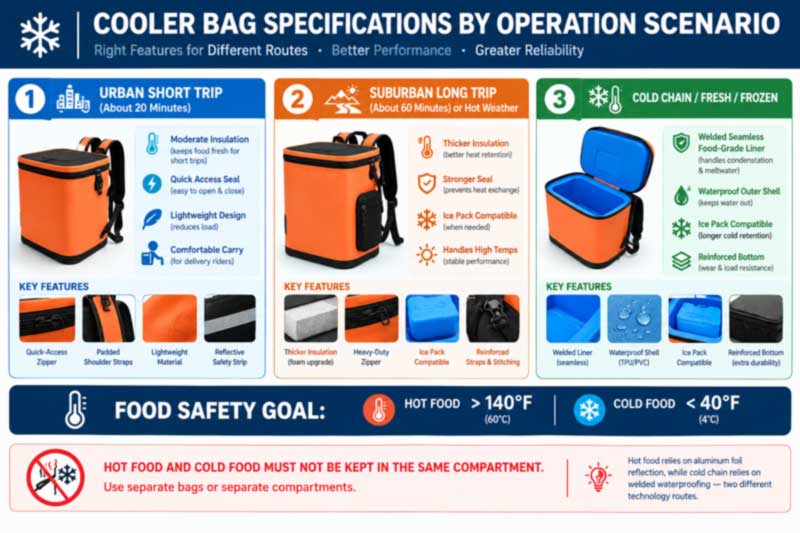
Food Grade Soft Cooler Manufacturing Standards

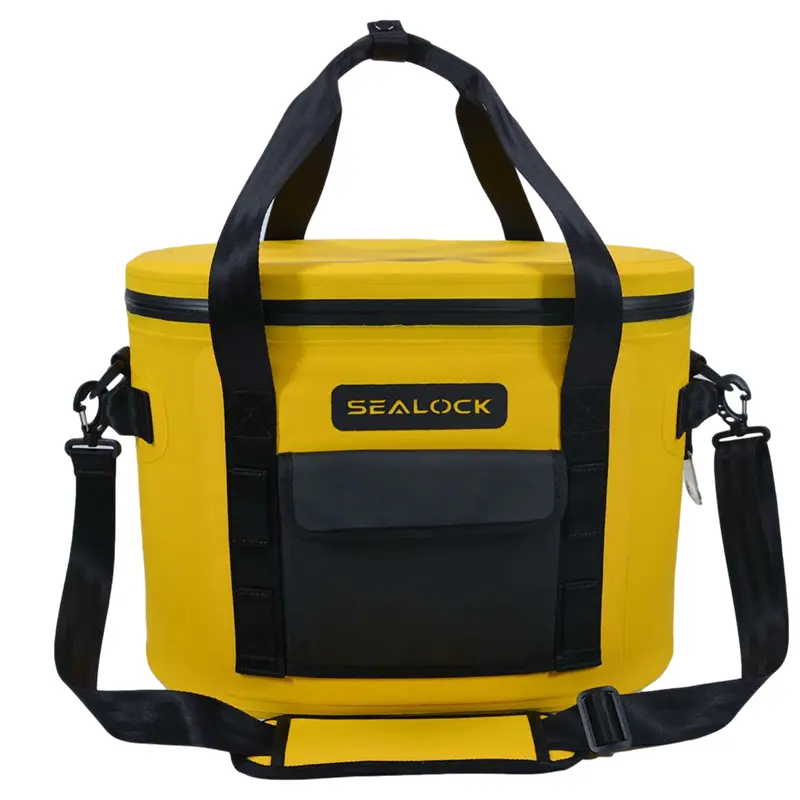
A soft cooler holds food and melting ice against its liner for hours at a time. That makes the liner a food-contact material in the regulatory sense, subject to real law in every major market — not a marketing adjective. Yet "food grade" appears on thousands of listings with no standard named, no test report behind it, and no understanding of the fact that compliance in one market does not transfer to another. This guide sets out what the term actually means under US, EU and Chinese rules, what documentation a buyer should demand, and what a manufacturer must do to earn the claim. Sealock (YiFuLong Outdoor Gear Co., Ltd.) uses food-grade inner liners across its entire range.


ຫຼັກການທີ່ຢູ່ເບື້ອງຫລັງທຸກໆກອບ

All three major regimes rest on the same idea: the material must not transfer its constituents into food in harmful amounts. The EU states it most explicitly — under the framework regulation, materials < cite index="123-1">must not endanger human health or bring any changes in smell, composition, colour or taste to the food, and all food contact materials should be manufactured according to good manufacturing practice. The US applies an equivalent test: < cite index="119-1">every food product must meet the FDA's "reasonable certainty of no harm" standard, meaning it won't pose health risks when used as intended.

ສອງຜົນສະທ້ອນປະຕິບັດຕາມເລື່ອງນັ້ນສໍາລັບເຄື່ອງເຢັນ. ກ່ອນອື່ນ ໝົດ, ຄວາມປອດໄພແມ່ນກ່ຽວກັບການເຄື່ອນຍ້າຍ— ສິ່ງ​ທີ່​ຍ້າຍ​ຈາກ liner ເຂົ້າ​ໄປ​ໃນ​ສະ​ບຽງ​ອາ​ຫານ — ບໍ່​ແມ່ນ​ກ່ຽວ​ກັບ​ຊື່​ອຸ​ປະ​ກອນ​ການ​. ອັນທີສອງ, ຂະບວນການຜະລິດແມ່ນສ່ວນຫນຶ່ງຂອງການປະຕິບັດຕາມ, ບໍ່ພຽງແຕ່ວັດສະດຸເທົ່ານັ້ນ.

ສະຫະລັດ: 21 CFR ແລະກົນໄກການເກັບກູ້

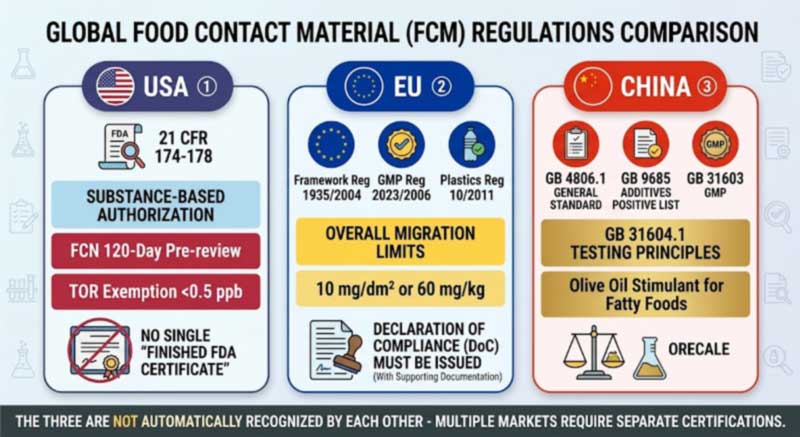
The regulatory home is Title 21: < cite index="125-1">the FDA governs food contact materials under 21 CFR Parts 174–178, within the broader < cite index="118-1">21 CFR Parts 170–199 covering the various material categories. Compliance is substance-based rather than product-certified — there is no single "FDA certificate" for a finished cooler bag. Instead, each substance in the food-contact layer must have a legal basis for its use.

New substances go through a defined pathway: < cite index="125-1">the Food Contact Notification (FCN) programme requires manufacturers to submit safety data for new food contact substances, undergoing a 120-day premarket review. Note that an FCN is supplier-specific, so a clearance held by one material supplier does not automatically cover another's version of the same material. A lighter route exists for negligible-exposure substances: < cite index="120-1">a Threshold of Regulation (TOR) exemption applies to food contact materials that pose no health risks, contain no carcinogens, and have a dietary concentration of less than 0.5 parts per billion.

ສະຫະພາບເອີຣົບ: ກອບ, GMP, ແລະຜູ້ຊື້ເອກະສານລືມ

ໂຄງສ້າງຂອງ EU ແມ່ນຊັ້ນ, ແລະແຕ່ລະຊັ້ນເຮັດວຽກທີ່ແຕກຕ່າງກັນ:

  • ກົດລະບຽບກອບ (EC) 1935/2004— ນຳໃຊ້ກັບອຸປະກອນການຕິດຕໍ່ກັບອາຫານທັງໝົດ ແລະ ກຳນົດຄວາມຕ້ອງການຄວາມປອດໄພທົ່ວໄປ.
  • ກົດລະບຽບ GMP (EC) 2023/2006 — governs how they are made. It < cite index="126-1">ensures the manufacturing process is well controlled so that specifications remain in conformity with the legislation: premises fit for purpose and staff awareness of critical production stages, and it < cite index="123-1">applies at all stages of production and distribution of food contact materials, excluding the production of raw materials.
  • ກົດລະບຽບ (EU) 10/2011— ກົດ​ລະ​ບຽບ​ສະ​ເພາະ​ສໍາ​ລັບ​ການ​ພາດ​ສະ​ຕິກ​, ລວມທັງ​ການ​ເຄື່ອນ​ຍ້າຍ​ໂດຍ​ລວມ (OM) ແລະ​ການ​ທົດ​ສອບ​ການ​ຈໍາ​ກັດ​ການ​ເຄື່ອນ​ຍ້າຍ​ສະ​ເພາະ (SML).

ຂອບເຂດຈໍາກັດການເຄື່ອນຍ້າຍ, ເປັນຕົວເລກ

The overall migration limit is concrete and worth knowing: < cite index="119-1">the total amount of substances that can migrate from the material into food is limited to 10 mg per square decimetre of material, or 60 mg per kilogram of food. Testing uses standardised proxies: < cite index="119-1">to replicate real-life food storage and usage conditions, tests use different food simulants, which are liquids designed to behave like actual foods. That is why a test report is only meaningful with its conditions attached — simulant, temperature and duration must match how your product is actually used.

ຖະແຫຼງການຂອງການປະຕິບັດຕາມ

This is the document most cooler buyers have never requested and every serious EU retail buyer will eventually require. < cite index="119-1">If the material passes all required tests, a Declaration of Compliance (DoC) can be issued — this document confirms the material meets EU 10/2011 standards and is backed by lab test reports proving its safety, and it is < cite index="119-1">a mandatory document for manufacturers and importers of certain food contact materials in the EU. Its purpose is chain-of-supply transparency: < cite index="121-1">to ensure that retailers and other companies in the supply chain can receive a summary of the compliance status.

Critically, the DoC is not a standalone certificate: < cite index="126-1">the DoC is based on supporting documentation which documents the reasoning on the safety of a plastic food contact material, and which must be provided to enforcement authorities on request — the supporting documentation also provides an important link to the manufacturer's responsibility under GMP. A DoC with no supporting dossier behind it is paperwork, not compliance.

ຢ່າສັບສົນສອງ "DoC".< cite index="119-1">ການປະກາດການປະຕິບັດຕາມວັດສະດຸສຳຜັດກັບອາຫານບໍ່ຖືກສັບສົນກັບການປະກາດຄວາມສອດຄ່ອງສຳລັບຜະລິດຕະພັນທີ່ມີເຄື່ອງໝາຍ CE. ພວກເຂົາເຈົ້າແມ່ນເອກະສານທີ່ແຕກຕ່າງກັນພາຍໃຕ້ກົດຫມາຍທີ່ແຕກຕ່າງກັນ. ຮ້ອງຂໍໃຫ້ DoC ຕິດຕໍ່ກັບອາຫານຕາມຊື່.


ຈີນ: ຊຸດ GB 4806

Because most soft coolers are manufactured in China, the Chinese framework is directly relevant to how the product is made — and it is more developed than most buyers realise. The structure mirrors the others: < cite index="118-1">GB 4806.1-2016 is the general safety standard for food contact materials, GB 9685-2016 lists permitted additives, GB 31603-2015 sets Good Manufacturing Practice standards, the GB 4806 series covers specific materials such as plastics, paper, coatings, rubber and glass, and GB 31604.1-2023 gives the general rules for migration testing.

The basic approach is familiar: < cite index="120-1">the basic principle in China is similar to the FDA and EU regulations — only approved substances may be used, and China also requires GMP and migration testing with rules described in separate standards. But the details differ enough to matter: < cite index="125-1">these standards specify testing conditions and simulants that sometimes differ from EU protocols, such as the use of olive oil for high-fat food migration tests. And there is a practical constraint worth knowing: < cite index="120-1">the biggest challenge regarding Chinese food contact material regulations is that some commonly used ingredients have not yet been approved.

ກົດລະບຽບທີ່ຈັບຜູ້ສົ່ງອອກ: compliance does not transfer between markets. A liner cleared in the US is not automatically compliant in the EU, and neither status covers China. Each regime has its own approved-substance lists, its own migration limits, its own simulants and its own documentation. If you sell into multiple markets, you need test evidence for each — and you should tell your manufacturer your destination markets at the specification stage, not after production.


comparison of US 21 CFR, EU 1935/2004 and China GB 4806 food contact material frameworks

ນີ້ຫມາຍຄວາມວ່າແນວໃດສໍາລັບການກໍ່ສ້າງ Cooler

ລະບຽບການແມ່ນກ່ຽວກັບວັດສະດຸທີ່ສໍາຜັດກັບອາຫານ, ແຕ່ການອອກແບບຂອງ cooler ກໍານົດວິທີການທີ່ອຸປະກອນປະຕິບັດຫນ້າທີ່ຂອງຕົນດີ.

liner ແມ່ນຫນ້າດິນສໍາຜັດກັບອາຫານ

Food-grade TPU and PEVA are the standard liner materials for soft coolers. PVC is cheaper but carries plasticiser-related restrictions in several markets, which is why it is generally avoided for regulated retail liners. Every Sealock insulated bag uses a food-grade inner liner across the range — a TPU membrane, PEVA film or equivalent food-grade waterproof liner depending on the model — and migration testing for a destination market can be arranged. Liner material selection is covered in ກະເປົ໋າເປ້ກັນຄວາມຮ້ອນແບບກຳນົດເອງ: ສະເພາະໂຟມ, ເສັ້ນ ແລະ ຄວາມອາດສາມາດຂອງທ່ານ.

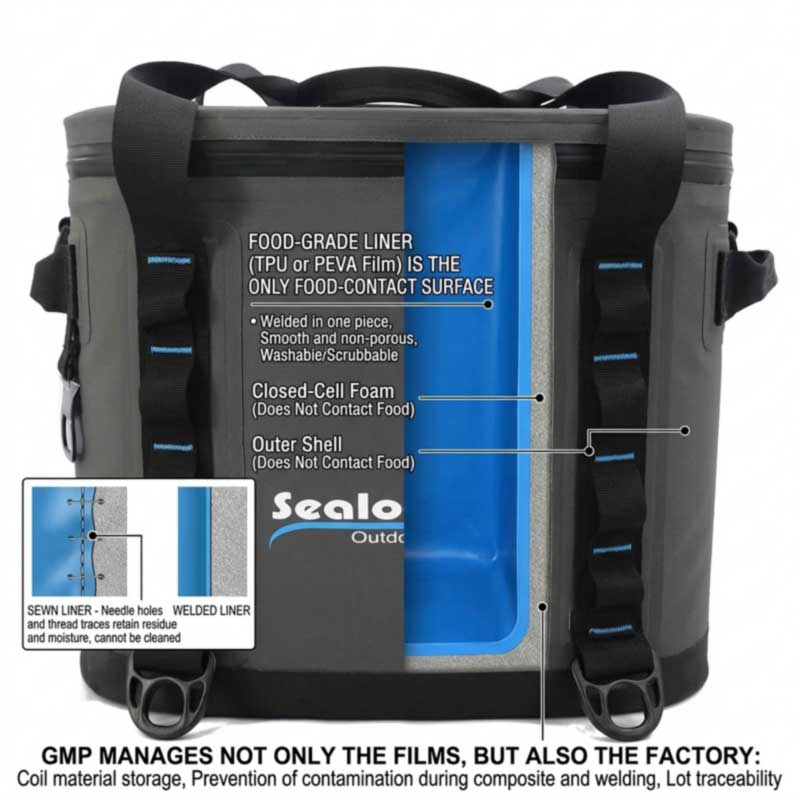
liners ເຊື່ອມແມ່ນການຕັດສິນໃຈອະນາໄມ, ບໍ່ພຽງແຕ່ການຕັດສິນໃຈຮົ່ວ

ຜ້າເຊັດຕົວມີຮູເຂັມ ແລະ ເສັ້ນດ້າຍຢູ່ໃນຫ້ອງອາຫານ — ບ່ອນທີ່ມີສານຕົກຄ້າງ, ຄວາມຊຸ່ມຊື່ນ ແລະ ເຊື້ອແບັກທີເຣັຍຢູ່ ແລະບ່ອນທີ່ການທໍາຄວາມສະອາດບໍ່ສາມາດບັນລຸໄດ້. ແຜ່ນເຊື່ອມແມ່ນແຜ່ນຕິດຕໍ່ເນື່ອງ, ກ້ຽງ, ບໍ່ມີຮູຂຸມຂົນທີ່ເຊັດອອກ. ກ່ຽວກັບຜະລິດຕະພັນທີ່ຈະຖືປາດິບໃນທ້າຍອາທິດຫນຶ່ງແລະອາຫານທ່ຽງຂອງເດັກນ້ອຍຕໍ່ໄປ, ຄວາມແຕກຕ່າງນັ້ນແມ່ນຊັບສິນຄວາມປອດໄພດ້ານອາຫານຫຼາຍເທົ່າກັບການຮົ່ວໄຫຼ. ເບິ່ງLeakproof Cooler Backpack ຜູ້ຜະລິດ: Welded vs Stitched Seams.

GMP ໃຊ້ກັບໂຮງງານ, ບໍ່ພຽງແຕ່ຮູບເງົາ

Both the EU and China require food-contact materials to be produced under good manufacturing practice. For a cooler factory that means controlled handling and storage of liner rolls, avoiding contamination during lamination and welding, traceability from material lot to finished goods, and staff who understand which production stages are critical. A buyer auditing a factory should ask how liner material is stored, how lots are traced, and who is responsible for food-contact compliance. The audit approach is covered in Soft Cooler Factory Audit List ສໍາລັບຜູ້ນໍາເຂົ້າ.

ສິ່ງທີ່ຕ້ອງຖາມຜູ້ສະຫນອງຂອງເຈົ້າສໍາລັບ

ຕະຫຼາດ ຂໍ ກວດເບິ່ງວ່າ…
ສະຫະລັດ ບົດລາຍງານການທົດສອບການເຄື່ອນຍ້າຍຕໍ່ກັບ 21 CFR ສໍາລັບວັດສະດຸ liner; ພື້ນຖານທາງດ້ານກົດໝາຍສໍາລັບສານທີ່ໃຊ້ (ລະບຽບການທີ່ລະບຸໄວ້, FCN ຫຼື TOR) ບົດລາຍງານກວມເອົາ liner ທີ່ແນ່ນອນຢູ່ໃນຖົງຂອງທ່ານ, ບໍ່ແມ່ນຕົວຢ່າງທົ່ວໄປ; ການຄຸ້ມຄອງ FCN ແມ່ນສະເພາະຜູ້ສະໜອງ
ສະຫະພາບເອີຣົບ ການປະກາດການປະຕິບັດຕາມສໍາລັບອຸປະກອນການຕິດຕໍ່ກັບອາຫານ, ບວກກັບບົດລາຍງານການທົດສອບການເຄື່ອນຍ້າຍໂດຍລວມແລະສະເພາະ ເອກະສານສະຫນັບສະຫນູນມີຢູ່ທາງຫລັງຂອງ DoC; simulants ແລະເງື່ອນໄຂການທົດສອບກົງກັບກໍລະນີການນໍາໃຊ້ຂອງທ່ານ
ຈີນ ບົດລາຍງານການທົດສອບຕໍ່ກັບມາດຕະຖານ GB 4806 ທີ່ກ່ຽວຂ້ອງແລະກົດລະບຽບການເຄື່ອນຍ້າຍ GB 31604.1 ມາດຕະຖານສະເພາະວັດສະດຸທີ່ຖືກຕ້ອງແມ່ນອ້າງອີງ
ຕະຫຼາດທັງຫມົດ ວັດສະດຸສະເພາະການຕັ້ງຊື່ liner ທີ່ແນ່ນອນ; ຫຼັກຖານ GMP; ການ​ກວດ​ສອບ​ຫຼາຍ​ ເອກະສານຊື່ຜະລິດຕະພັນແລະວັດສະດຸຂອງທ່ານ, ເປັນປະຈຸບັນ, ແລະມາຈາກຫ້ອງທົດລອງທີ່ໄດ້ຮັບການຮັບຮອງ
ສາມທຸງສີແດງໃນ "ຊັ້ນອາຫານ" ອ້າງວ່າ: a claim with no standard named; a test report for a different material or a different product than yours; and a certificate presented as a screenshot rather than a full report from a named accredited laboratory. Also treat "FDA certified" with caution — the FDA does not certify finished cooler bags, so a supplier using that phrase may not understand the framework it is claiming compliance with.


Sealock ຈັດການກັບການປະຕິບັດຕາມການຕິດຕໍ່ກັບອາຫານແນວໃດ

ເສັ້ນ ຜ້າປູຊັ້ນໃນຊັ້ນໃນອາຫານທົ່ວທຸກຂອບເຂດ — ເຍື່ອ TPU, ແຜ່ນ PEVA ຫຼືແຜ່ນກັນນໍ້າລະດັບອາຫານທຽບເທົ່າຕາມແບບຈໍາລອງ.
ການກໍ່ສ້າງ ເຊື່ອມ, liners ທີ່ບໍ່ມີ seamless - ຫ້ອງອາຫານກ້ຽງບໍ່ມີ porous ບໍ່ມີຮູ stitch ເພື່ອດັກສານຕົກຄ້າງ.
ການທົດສອບ ການທົດສອບການເຄື່ອນຍ້າຍທີ່ມີຢູ່ສໍາລັບຕະຫຼາດປາຍທາງ; SGS ຫຼື QIMA ພາກສ່ວນທີສາມການທົດສອບແລະການກວດກາຕາມຄໍາຮ້ອງຂໍ
ລະບົບຄຸນະພາບ ການກວດສອບ IQC ຂອງວັດສະດຸ liner ແລະເອກະສານ; IPQC; OQC ດ້ວຍການເກັບຕົວຢ່າງ AQL ແລະການເຊັນຕົວຢ່າງຄໍາ
ການຢັ້ງຢືນ ISO9001, BSCI, SMETA P4, GRS, HIGG, ສະແກນ
ການຜະລິດ ການເຊື່ອມໂລຫະຄວາມຖີ່ສູງ 27.12 MHz, ພາຍໃນໂຮງງານໃນທົ່ວສາມໂຮງງານໃນເມືອງ Dongguan, ຈີນ ແລະນະຄອນໂຮ່ຈີມິນ, ຫວຽດນາມ
ເງື່ອນໄຂ MOQ 300 pcs ຕໍ່ການອອກແບບ; ຕົວຢ່າງ 7-15 ມື້; ການຜະລິດ 30-45 ມື້; FOB ກວາງຕຸ້ງ

ຜະ​ລິດ​ຕະ​ພັນ​ທີ່​ສ້າງ​ຂຶ້ນ​ດ້ວຍ​ຜ້າ​ຊັ້ນ​ອາ​ຫານ​

Real Sealock ກໍ່ສ້າງໃນທົ່ວປັດໃຈແບບຟອມ, ເລືອກໂດຍຄວາມເຫມາະສົມແທນທີ່ຈະເປັນອັນດັບ:

ຮູບພາບ ຕົວແບບ Liner & build ເຊື່ອມຕໍ່
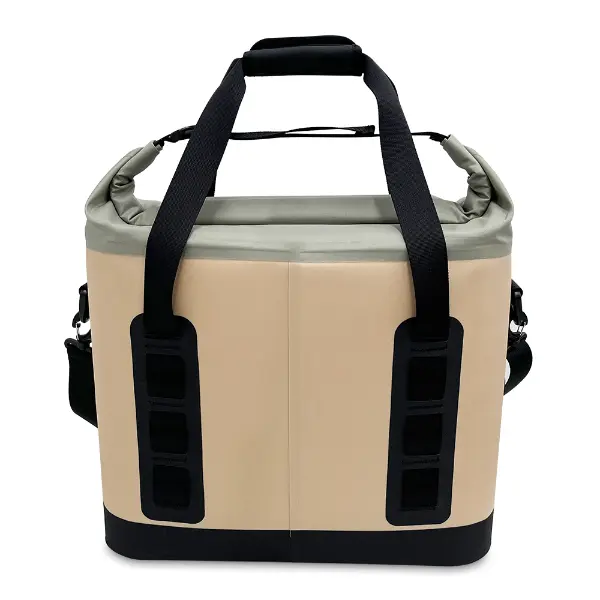
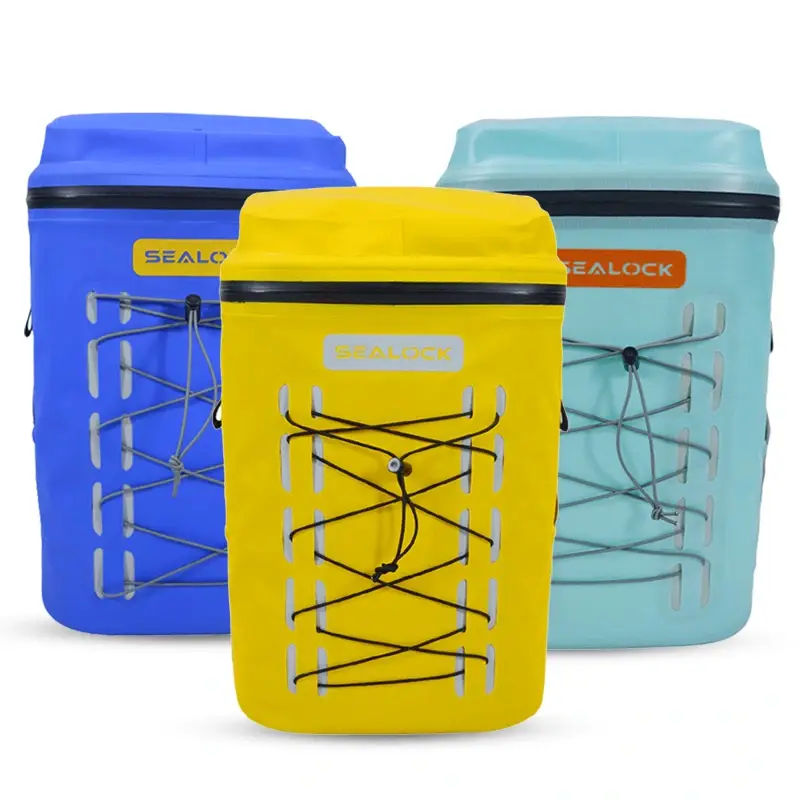
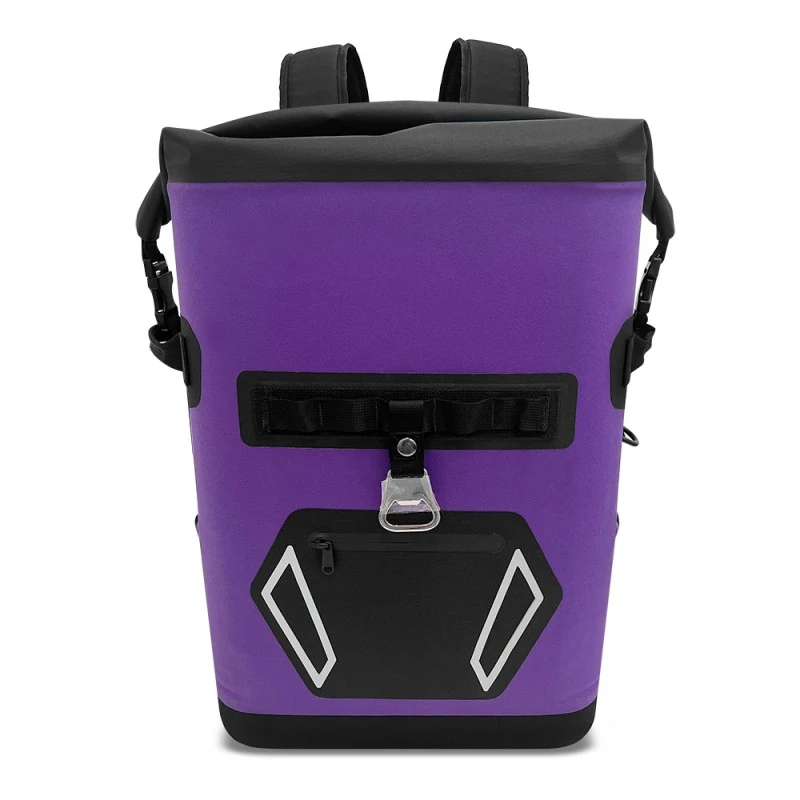
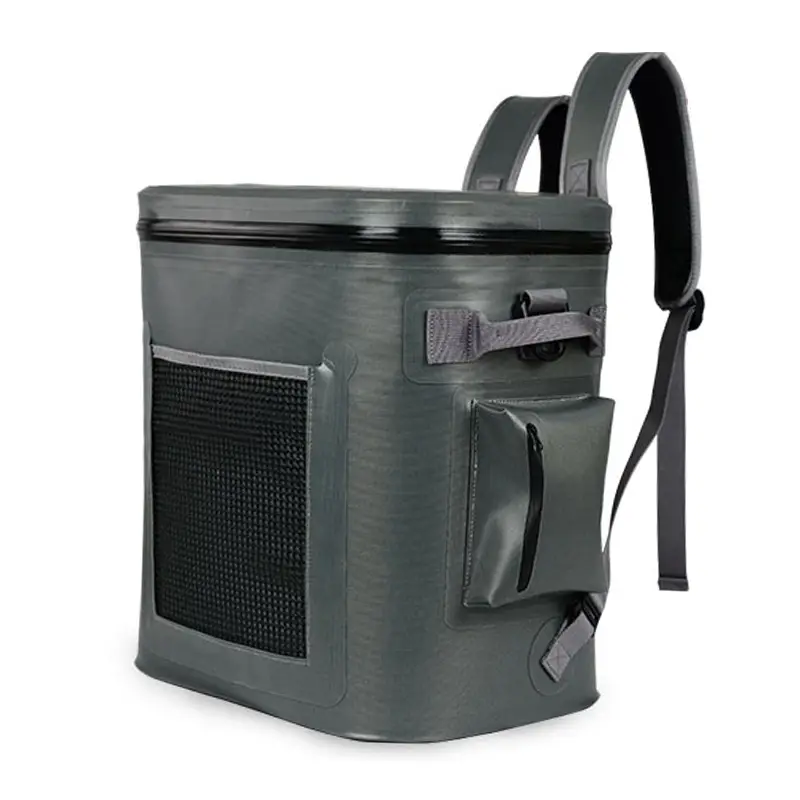
28L airtight-zipper insulated backpack cooler SL-I274 ເຄື່ອງເຮັດຄວາມເຢັນ 28L Airtight-Zipper Backpack (SL-I274) ເຍື່ອ TPU ຊັ້ນອາຫານ, ເປືອກເປືອກ TPU 840D, ຫຼັກ EVA, ເຊື່ອມ HF ເບິ່ງ
45L roll-top backpack cooler SL-I270 ເຄື່ອງເຮັດຄວາມເຢັນກະເປົ໋າຫລັງມ້ວນ 45L (SL-I270) ຜ້າປູ TPU ຊັ້ນອາຫານ, ເປືອກເປືອກ TPU 600D, ໂຟມ EVA, ມ້ວນເທິງເຊື່ອມ ເບິ່ງ
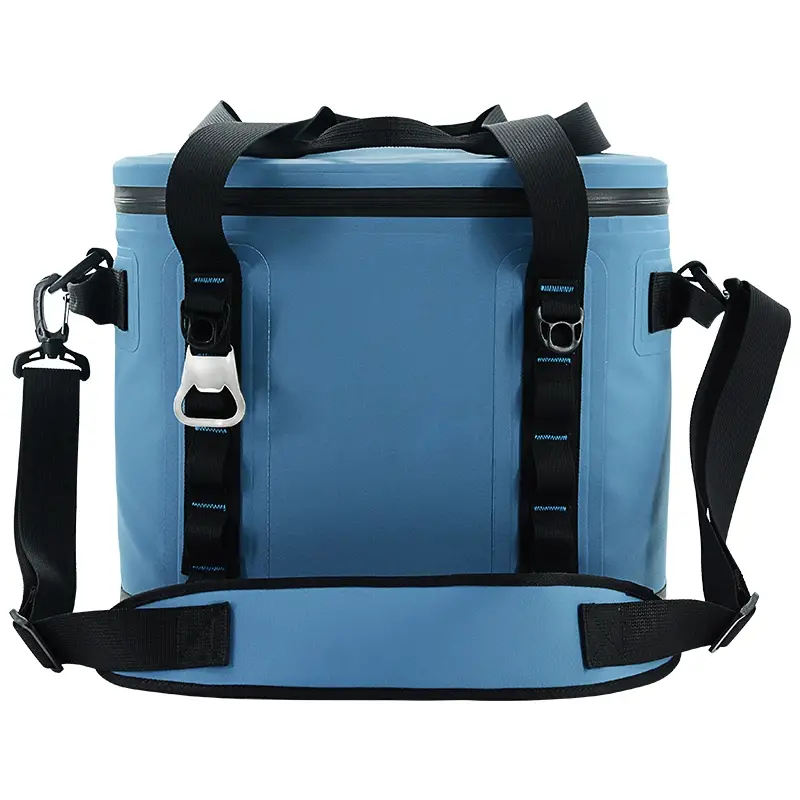
Roll-top leakproof soft cooler SL-I288 Roll-Top Soft Cooler ປ້ອງກັນການຮົ່ວໄຫຼ (SL-I288) ຜ້າກັນນ້ຳລະດັບອາຫານ, 840D TPU, ປິດ-cell EPE, HF welded seamless ເບິ່ງ
Insulated leakproof cooler backpack SL-I075A ກະເປົ໋າກະເປົ໋າເປ້ກັນຄວາມຮ້ອນທີ່ມີສນວນກັນຮົ່ວ (SL-I075A) ແຜ່ນໜັງ PEVA, ເປືອກຫຸ້ມນອກ PVC 840D, ໂຟມ EPE ເບິ່ງ
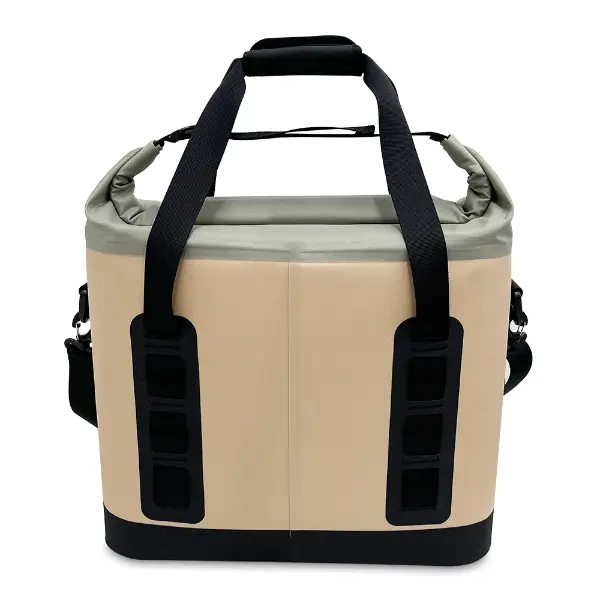
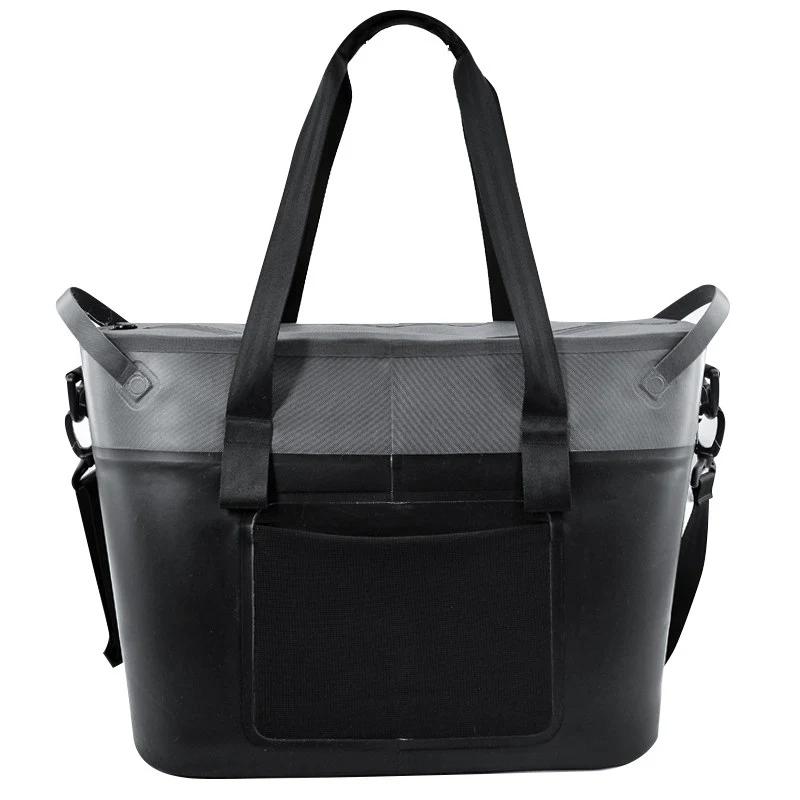
24L soft cooler tote SL-I230 Tote Soft Cooler 24L (SL-I230) ແຜ່ນຮອງອາຫານ, 840D TPU, 20 mm XPE, IPX7, HF welded ເບິ່ງ
cross-section showing the welded food-grade liner as the food contact surface versus a stitched liner

FAQ: Food Grade Cooler Bag ມາດຕະຖານ

ຖາມ: "ຊັ້ນອາຫານ" ຫມາຍຄວາມວ່າແນວໃດຢູ່ໃນຖົງເຢັນ?

A: That the food-contact liner complies with the food-contact regulations of the market it is sold into — principally 21 CFR Parts 174–178 in the US, Regulation 1935/2004 with GMP Regulation 2023/2006 and, for plastics, 10/2011 in the EU, and the GB 4806 series in China. All rest on the same principle: the material must not transfer constituents into food in harmful amounts. Without a named standard and a test report, the phrase means nothing.

ຖາມ: ມີສິ່ງດັ່ງກ່າວເປັນຖົງເຢັນ "ການຮັບຮອງ FDA" ບໍ?

A: ບໍ່. ລະບົບ FDA ແມ່ນອີງໃສ່ສານຫຼາຍກວ່າການຢັ້ງຢືນຜະລິດຕະພັນ — ແຕ່ລະສານໃນຊັ້ນຕິດຕໍ່ກັບອາຫານຕ້ອງການພື້ນຖານທາງດ້ານກົດໝາຍ, ບໍ່ວ່າຈະເປັນລະບຽບທີ່ລະບຸໄວ້, ແຈ້ງການຕິດຕໍ່ກັບອາຫານ ຫຼື ເກນການຍົກເວັ້ນລະບຽບການ. ສິ່ງທີ່ທ່ານຄວນຮ້ອງຂໍແມ່ນບົດລາຍງານການທົດສອບການເຄື່ອນຍ້າຍຕໍ່ກັບ 21 CFR ສໍາລັບເສັ້ນສະເພາະໃນຜະລິດຕະພັນຂອງທ່ານ, ບໍ່ແມ່ນໃບຢັ້ງຢືນສໍາລັບຖົງ.

ຖາມ: ການປະກາດການປະຕິບັດຕາມແມ່ນຫຍັງ ແລະຂ້ອຍຕ້ອງການອັນໃດ?

A: It is the EU document confirming a food-contact material meets the applicable requirements, backed by lab test reports, and it is mandatory for certain food-contact materials. It exists so everyone down the supply chain can see the compliance status. Note it must sit on supporting documentation available to enforcement authorities — and do not confuse it with the Declaration of Conformity used for CE-marked products.

Q: ຖ້າ liner ຂອງຂ້ອຍແມ່ນປະຕິບັດຕາມ FDA, ມັນແມ່ນສອດຄ່ອງກັບ EU ບໍ?

A: ບໍ່. ການປະຕິບັດຕາມບໍ່ໂອນລະຫວ່າງຕະຫຼາດ. ແຕ່ລະລະບອບການມີບັນຊີລາຍການສານທີ່ໄດ້ຮັບການອະນຸມັດຂອງຕົນເອງ, ຂອບເຂດຈໍາກັດການເຄື່ອນຍ້າຍ, ການທົດສອບ simulants ແລະຂໍ້ກໍານົດເອກະສານ - ການທົດສອບການເຄື່ອນຍ້າຍຂອງຈີນແມ່ນແຕ່ໃຊ້ simulants ທີ່ແຕກຕ່າງກັນຈາກ EU ໃນບາງກໍລະນີ, ເຊັ່ນ: ນ້ໍາມັນມະກອກສໍາລັບອາຫານທີ່ມີໄຂມັນສູງ. ການຂາຍເຂົ້າໄປໃນຕະຫຼາດຈໍານວນຫນຶ່ງຫມາຍເຖິງການໄດ້ຮັບຫຼັກຖານສໍາລັບແຕ່ລະຄົນ.

ຖາມ: ການຈໍາກັດການເຄື່ອນຍ້າຍຂອງ EU ແມ່ນຫຍັງ?

A: ຂອບເຂດຈໍາກັດການເຄື່ອນຍ້າຍໂດຍລວມແມ່ນ 10 ມລກຕໍ່ຕາແມັດຂອງວັດສະດຸຫຼື 60 ມລກຕໍ່ກິໂລອາຫານ, ໂດຍມີຂອບເຂດຈໍາກັດການເຄື່ອນຍ້າຍສະເພາະຕໍ່ກັບສານແຕ່ລະຄົນ. ການທົດສອບໃຊ້ simulants ອາຫານທີ່ເລືອກໃຫ້ປະຕິບັດຕົວຄືກັບອາຫານທີ່ແທ້ຈິງ, ດັ່ງນັ້ນບົດລາຍງານແມ່ນມີຄວາມຫມາຍພຽງແຕ່ເມື່ອ simulant, ອຸນຫະພູມແລະໄລຍະເວລາກົງກັບວິທີການນໍາໃຊ້ຕົວຈິງຂອງຜະລິດຕະພັນ.

ຖາມ: ວິທີການຕິດຝານັ້ນມີຜົນກະທົບຕໍ່ຄວາມປອດໄພຂອງອາຫານບໍ?

A: Yes, in practice. A stitched liner puts needle holes and thread inside the food chamber, where residue and moisture lodge and cleaning cannot reach; a welded liner is a continuous, smooth, non-porous surface that wipes clean. Good manufacturing practice requirements also extend to the factory — material handling, contamination control during production, and lot traceability — not only to the film itself.

ຕ້ອງການເອກະສານຕິດຕໍ່ອາຫານສໍາລັບຕະຫຼາດຂອງທ່ານບໍ?Sealock (YiFuLong Outdoor Gear Co., Ltd.) ກໍ່ສ້າງເຄື່ອງເຮັດຄວາມເຢັນທີ່ເຊື່ອມໂລຫະດ້ວຍເຄື່ອງເຮັດອາຫານຊັ້ນນໍາໃນທົ່ວຂອບເຂດທັງຫມົດ, ດ້ວຍການທົດສອບການເຄື່ອນຍ້າຍທີ່ມີຢູ່ໃນຕະຫຼາດປາຍທາງຂອງທ່ານແລະການທົດສອບພາກສ່ວນທີສາມຕາມຄໍາຮ້ອງຂໍ. ບອກທີມງານທີ່ທ່ານຂາຍ, ແລະພວກເຂົາຈະຢືນຢັນວ່າໂຄງການຂອງທ່ານຕ້ອງການເອກະສານໃດ.

ອີເມວ:info@sealock.com.hk |  ໂທລະສັບ: +86-13632981825  | ຊອກຫາຊ່ວງຄວາມເຢັນອ່ອນ

Regulations, limits and standard references cited here reflect publicly available regulatory and testing-industry sources as of mid-2026; food-contact legislation is amended regularly and requirements differ by market and material. This is general information, not regulatory or legal advice — confirm current requirements for your destination markets with an accredited laboratory or qualified regulatory adviser before production.

ຂ່າວທີ່ກ່ຽວຂ້ອງ
ຝາກຂໍ້ຄວາມໃຫ້ຂ້ອຍ
X
ພວກເຮົາໃຊ້ cookies ເພື່ອສະເຫນີໃຫ້ທ່ານມີປະສົບການການຊອກຫາທີ່ດີກວ່າ, ວິເຄາະການເຂົ້າຊົມເວັບໄຊທ໌ແລະປັບແຕ່ງເນື້ອຫາ. ໂດຍການນໍາໃຊ້ເວັບໄຊທ໌ນີ້, ທ່ານຕົກລົງເຫັນດີກັບການນໍາໃຊ້ cookies ຂອງພວກເຮົາ.ນະໂຍບາຍຄວາມເປັນສ່ວນຕົວ